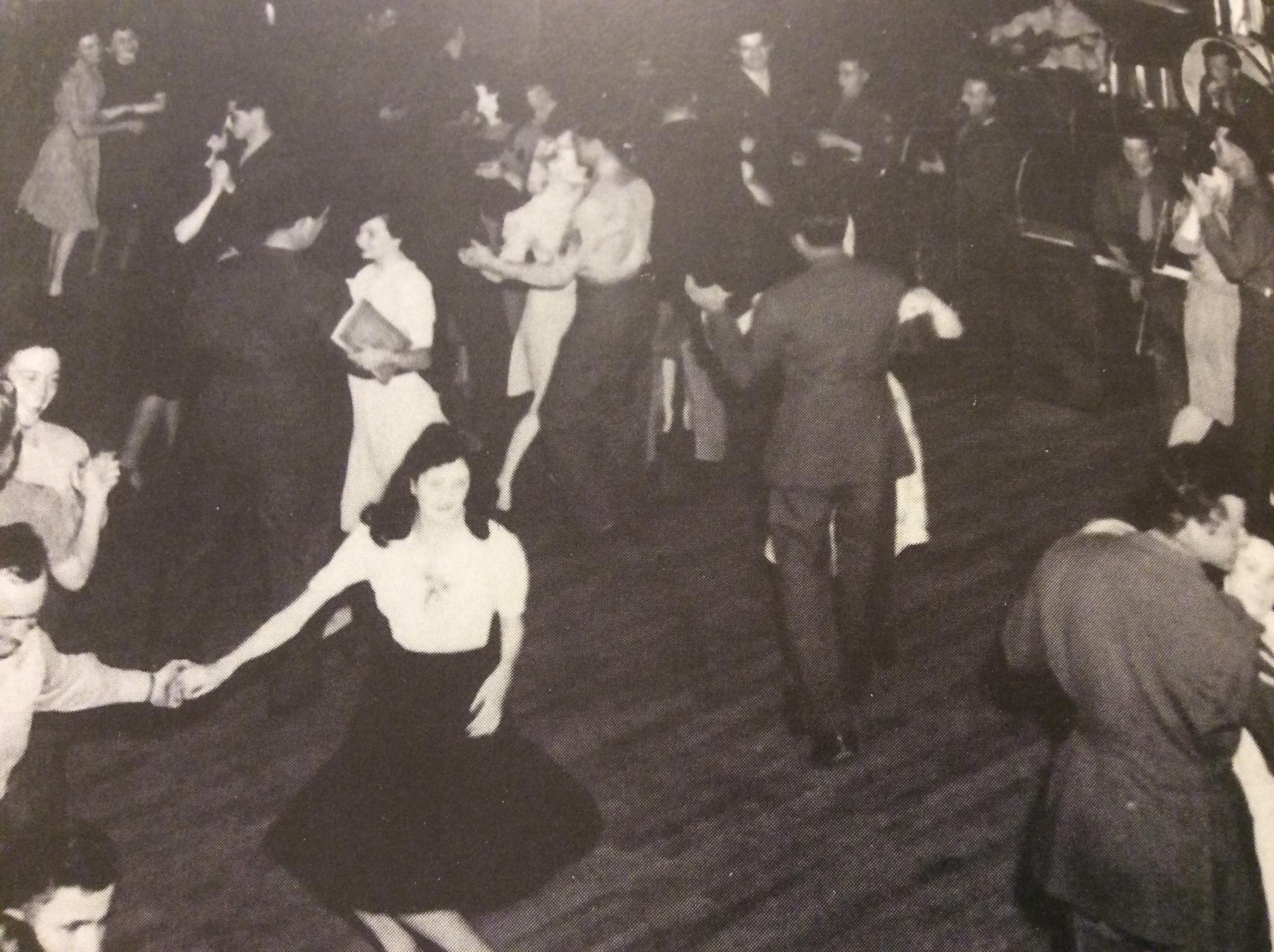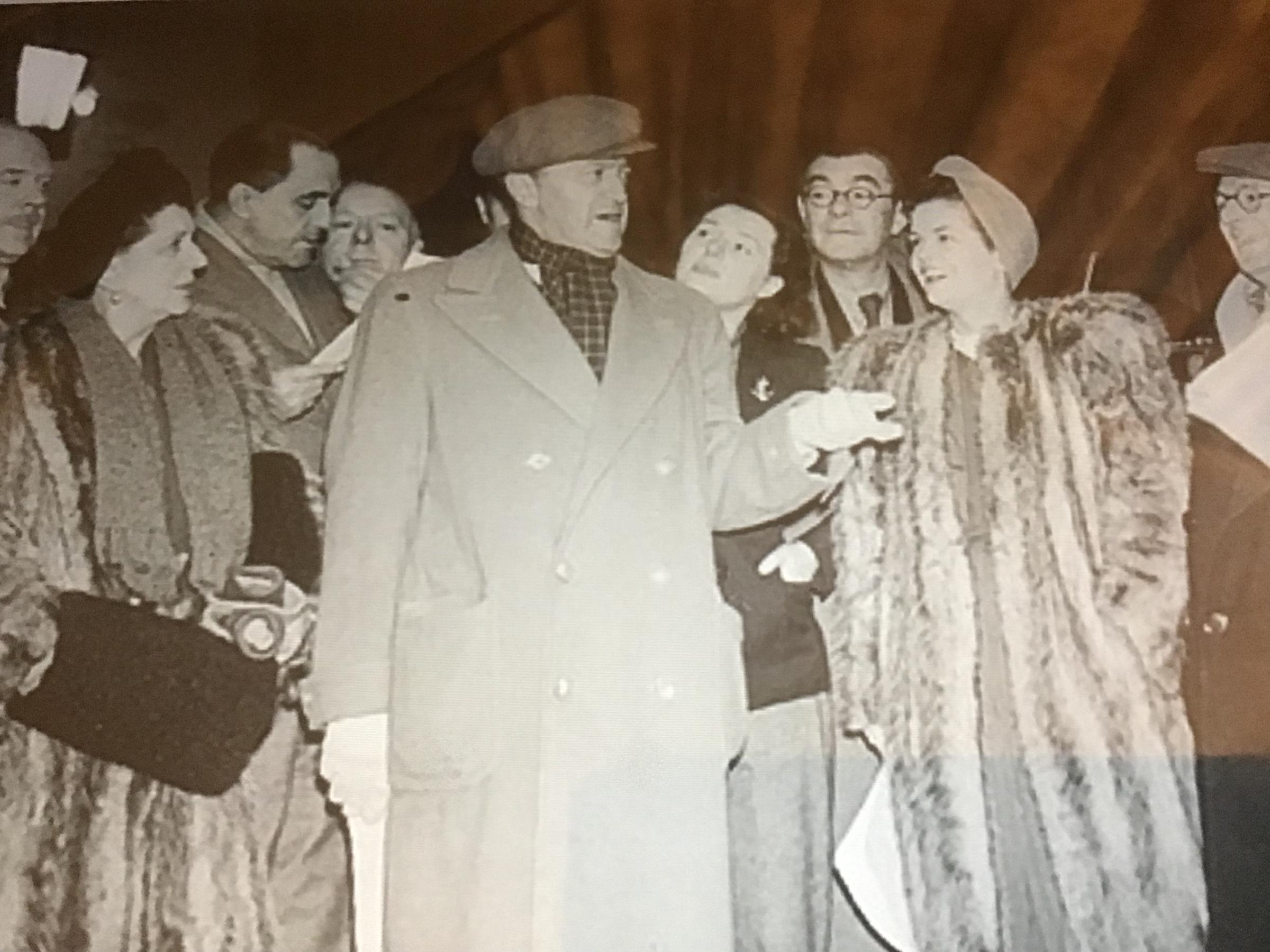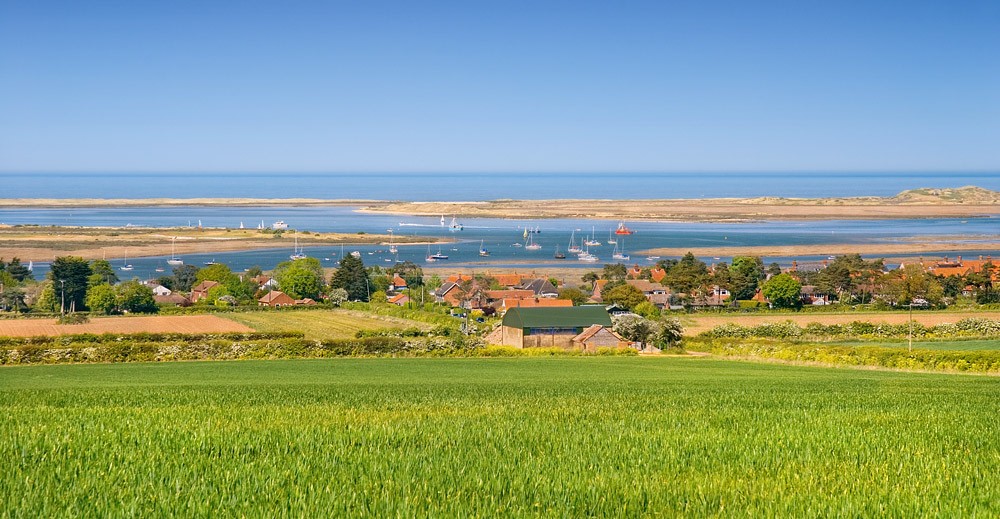
In rural areas music played a key role in people’s lives in terms of entertainment. Music could be live at musical events for listening, singing and dancing, or heard on gramophone records. Music was also important in church services and for children in schools. Brancaster was fortunate in having the Simms Reeve Institute Hall for events, and an active church and school. Wells and Hunstanton were also within reach, with some planning, by bus or bicycle. Brancaster was also home to soldiers guarding the coast, RAF personnel from Docking and Bircham and the occasional American serviceman from the 8th Airforce, who brought wider experience and new sounds to the village.
Music was vital in helping to keep up people’s spirits and in bringing communities together. Arising from the music hall tradition, British big bands flourished in this era, offering in general a more melodic sound than the swing bands from America. Along with popular dance bands there were singers who became household names, perhaps the most famous being Vera Lynn, “The Forces’ Sweetheart”. Her renditions of “We’ll Meet Again” and “The White Cliffs of Dover” remained firm favourites with the public as well as the armed forces. Vera Lynn, like many singers and entertainers, travelled widely in war zones, entertaining service personnel through the good offices of ENSA.
The influence of America was also felt with the arrival of American personnel in the country. Swing bands such as the Glenn Miller Orchestra, with a multitude of popular instrumental music and songs, became widely known across Britain. Their coming also brought new dance crazes, particularly the jive, which took off in popularity together with a variety of dances based on the jitterbug. Of course, traditional ballroom dancing still remained very popular.
People also listened to classical music, either on gramophone records or, if they were fortunate, in live concerts, particularly those given by small ensembles.
In Brancaster, besides the dances organised at Simms Reeve, people had the opportunity, where possible, to travel to Wells or Hunstanton, where they might hear a wider variety of music. The really intrepid could catch the train at Docking and travel to King’s Lynn to attend concerts and other entertainments, although because of the blackout restrictions, many performances were held in the afternoon.
Newspapers were the most widespread method of getting information and news across to the population. They were also important in setting out how people were amusing themselves in adversity and in keeping morale high. In 1939 the circulation of the major daily and Sunday nationals was about 18 million, rising in 1945 to over 35 million. The readership of some titles was quite extraordinary, with the two most popular dailies, the Express and Mirror rising from 5 million a day to 7.5 million, and the Sunday News of the World from 4 million to 8 million. This demonstrates that the desire for news about the war and other events increased as the war went on. As most newspaper copies were read by more than one person, the circulation figures underestimate the total readership.
In rural regions there were also provincial newspapers; in the Brancaster area the Eastern Daily News was given both the national and local news. All this expansion ran against a rationing of newsprint, which resulted in papers being reduced in size.
The papers reflected the hopes and fears of people at large – air raids, blackouts, the destruction of property, evacuation of children, the loss or absence of loved ones, rationing and conscription. They created and also reflected the output of popular culture, particularly music, sports and the cinema.
The three most popular papers were he Express, Mirror and the News of the World. The Express was run by Lord Beaverbrook, who was something of a “Marmite” figure for senior people in the armed forces and government but had strong support from Churchill. The Express was always bright, lively and fiercely patriotic, particularly when Churchill made Beaverbrook a minister. It attracted articles by such people as Michael Foot, G.B. Shaw and Leon Trotsky. It had serialised stories by Agatha Christie, Dorothy Parker and Ngaio Marsh, a gossip column by William Hickey and film reviews. It also carried a daily cartoon of Rupert Bear.
The Mirror was a complete contrast to the Express. It was a tabloid rather than a broadsheet and, as a result, contained lots of pictures with striking captions, focussing on glamour. Its focus was on amusing rather than informing, and on human interest items. There was also a wealth of cartoons, with Popeye and Jane strips particularly popular. Readers were offered opportunities to air their views and would receive advice from writers such as Cassandra. The Mirror was the paper that, more than any other, promoted popular culture and unashamedly encouraged jingoistic and patriotic sentiments. However, the paper had a serious side too, and its correspondents made detailed reports from war zones and attracted articles from leading politicians such as Attlee and Churchill. It was also the paper with the strongest message for change after the war, with an emphasis on ideas from the socialist spectrum.
The News of the World could lay claim to being Britain’s dominant Sunday newspaper, with a circulation almost double that of its rivals. As a broadsheet it offered laughter from George Formby, song sheets from Gracie Fields and Flanagan and Allen, together with film and theatre reviews. Sports also featured strongly, with prominent writers such as Henry Cotton on golf. Features included articles by Somerset Maughan. Leslie Hore-Belisha became a regular contributor when he stepped down as a member of the Cabinet and was very influential, particularly on what Britain should look like after the war ended.
In the final analysis, the time between 1939 and 1945 resulted in major changes to the way in which people sought information and news and the channels that became popular for entertainment. Pressures increased from people across Britain for changes in the way the country was organised and governed, resulting in Attlee’s landslide victory in 1945 on a strong socialist agenda. Changes in entertainment were also significant, with new forms of film, dance and radio, with strong influence from America. Newspapers had also increased dramatically during the war in terms of their circulation and, as a consequence, in their influence in people’s lives. All of this was relevant to villages such as Brancaster, as ease of transport brought these changes to the rural areas, albeit at a slower pace.
There are a number of newspapers from the war years on display, along with sheet music of popular songs from the 1940s.